
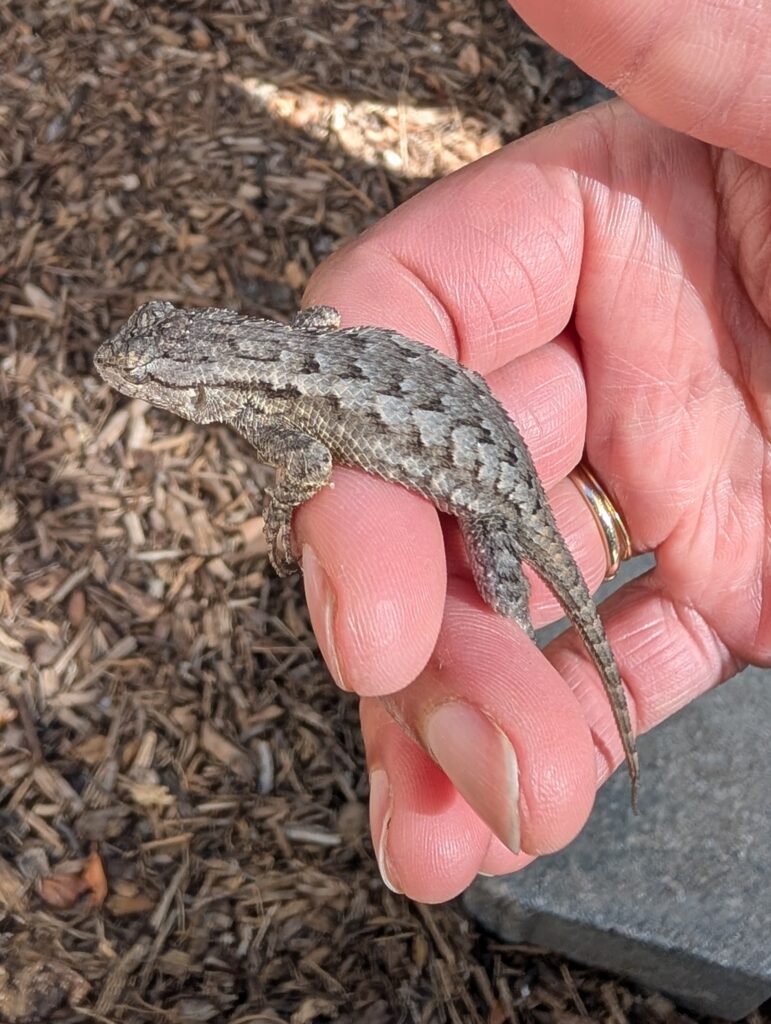
Did you know you can save a drowned lizard’s life by doing chest compressions with your finger? It’s true. And it’s way easier — and way less intimidating — than you might think.
While I couldn’t find an official guide on “how to perform CPR on a lizard,” I went with my instincts. Here’s what I did (and what you can do if you ever find yourself in the same situation).
Step-by-Step: How to Help a Drowned Lizard
Step-by-Step: How to Help a Drowned Lizard
1. Put the lizard on its back.
Lay it gently on a towel or the palm of your hand.
2. Do gentle compressions.
Use one finger to lightly press the area between its two front legs.
Think tapping your finger on a desk — not pushing an elevator button.
Do about ten light taps, then pause and look for movement.
3. Watch and repeat.
If you don’t see any signs of life, continue gentle compressions every few seconds, pausing often to check for change.
4. Look for signs of life.
The lizard might open its mouth, expel water, or make a gasping motion — all good signs!
Give it space to do this on its own. If it goes completely still, resume light compressions.
5. Know when it’s breathing.
When the sides of its body begin expanding and deflating consistently, it’s breathing on its own. (You’ll see side-to-side movement rather than the chest rising and falling.)
6. Flip and recover.
Gently turn it back over and keep it propped up. I held mine in my hand until it started straightening out and acting more alert.
7. Let it rest.
It’ll probably be weak and dazed for a few minutes. Stay with it. You can offer a bug, but don’t take it personally if it refuses — it’s still recovering from its whole “back-from-the-dead” moment.
8. Release.
Once it’s ready, it’ll let you know — and sprint off like nothing ever happened.
A Quick PSA
Once you’ve finished your heroic rescue, check your yard for open water sources — buckets, empty planters, shallow ponds, or birdbaths. Drain them, cover them, or add sticks and rocks so small animals can climb out if they fall in.
Then pat yourself on the back for being a responsible human. 💪
Why Lizards Deserve Your Love
If you’re reading this, you’re probably already Team Lizard. But just in case you need a reminder:
- Free pest control: They munch on mosquitoes, flies, beetles, ants, and grasshoppers — your own tiny pest squad.
- Chemical-free gardening: Fewer bugs means fewer pesticides. Great for your plants and your conscience.
(Unless you have a citrus tree… that’s another battle. We’ll talk about that another time.) - Environmental indicators: Lizards are sensitive to pollution. If they like your yard, it means you’re doing something right.
- Ecosystem balance: They eat pests and feed bigger wildlife — nature’s perfect middle managers.
- Tiny dinosaurs: Harmless, beautiful, and endlessly entertaining.
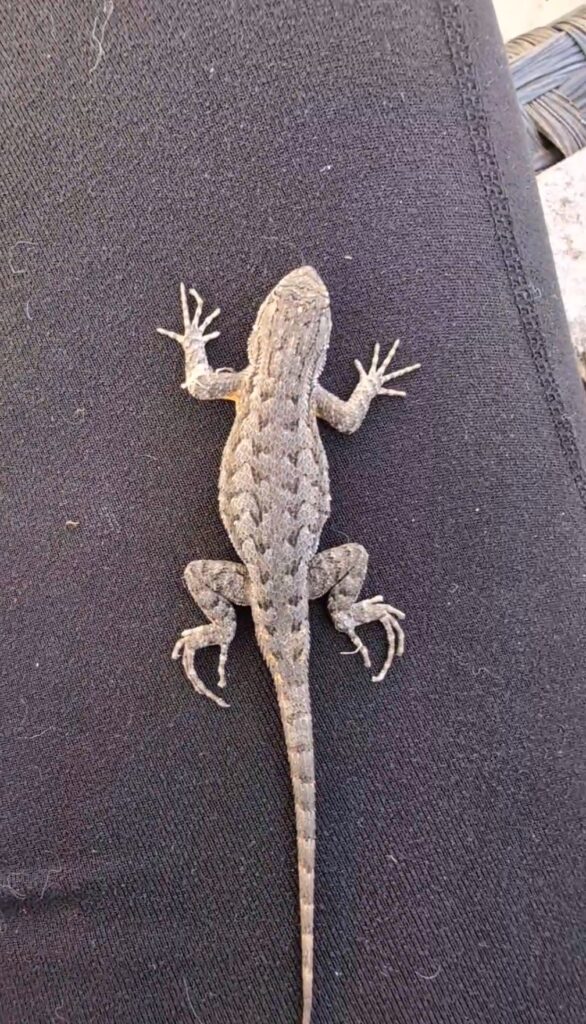
The Western Fence Lizard I Saved
You’re probably wondering how we got here.
The other day, I was in the garden checking on my dragon fruit. We have a small, abandoned pond that had collected a few inches of rainwater. I meant to drain it the day before, but I’d spotted some dragonfly larvae swimming around and figured I’d wait until they were ready to fly away — or until the water got low enough to move them to the larger pond.
I placed a single long wooden stake inside for any wildlife that might fall in and need a way out. I also tossed in a piece of mosquito dunk to handle any mosquito larvae that might have snuck in.
The next day, I came back. Not sure what compelled me, but as I was walking by one of my dragon fruit trellises, I grabbed that same wooden stake and swirled it around the pond for a second. I don’t know why. I meant to set it back down and keep walking — and that’s what I did — but out of the corner of my eye, I saw something I wasn’t expecting.
Something that hadn’t been there yesterday.
A small gray-and-brown lizard was swirling around in the water I’d just stirred. I quickly scooped it up with the stick and placed it on the mulch nearby. It laid there lifeless.
I stood there, silently berating myself for not being more responsible. Maybe the stick wasn’t wide enough. Maybe the mosquito dunk made it sick. I went back inside for a few seconds so I could continue my self-berating elsewhere.
Then I thought, Is it possible to save a drowned lizard? Something told me I should try. I’d feel worse if I didn’t. Even if it didn’t work — at least I tried.
So I ran back outside, flipped the little guy over, and the rest was history.
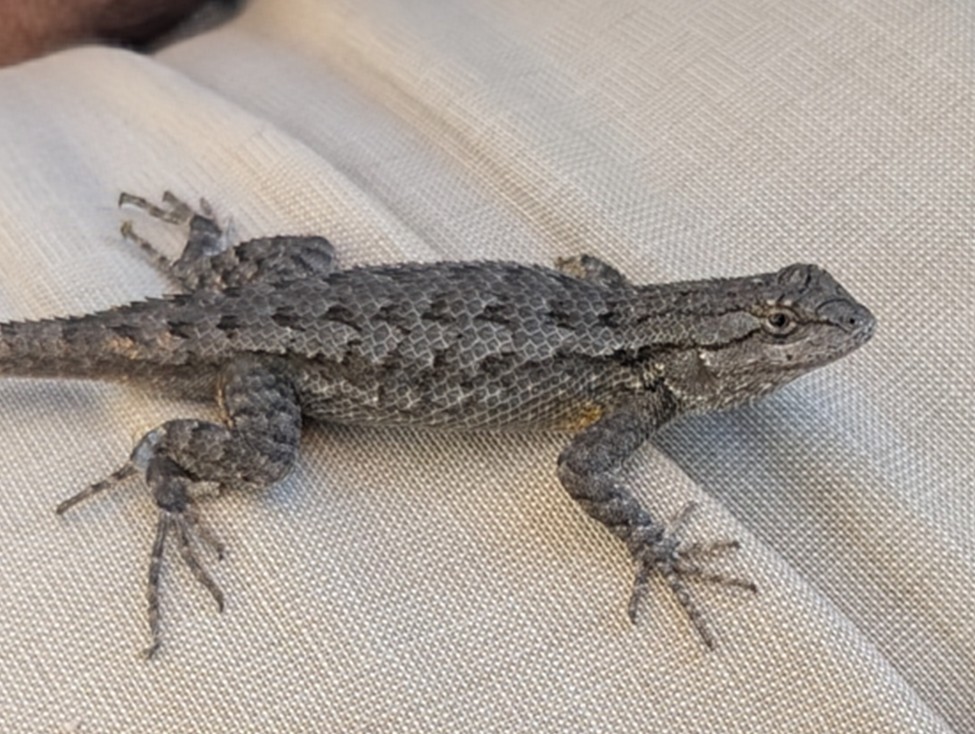
The lizard I rescued was a western fence lizard — probably a young male, judging by its small size and faint blue markings. As it grows, that belly and throat will turn a striking ocean blue, glowing against the California desert sun.
Confession: it’s tough for me to watch the part where it’s struggling, even though I know it ends well. (So yes, there’s a giant emoji covering those first few seconds)
If you’d like to see another example of someone performing chest compressions on a lizard, check out this video: https://youtu.be/dWtCbztwrTg?si=EJ1NLOAez4kHWcMK
💚 Be Kind to the Little Ones
Even the tiniest lives matter. A bit of awareness — and a gentle finger — can make the difference between tragedy and a miracle.
I named him Beau.
Leave a Reply